
Louisiana City Directory Collections
Louisiana does not have one statewide directory shelf or a single run that covers every town. New Orleans has the most detailed documented chronology, while Baton Rouge, Alexandria, Lake Charles, and Shreveport appear in the National Archives circa-1930 directory microfilm list for selected years. Parish and city libraries may hold additional local volumes, so treat the table as a route map. Before planning a visit, check the exact catalog record, format, and access terms with the named repository.
| Collection | Years | Where Held | Access |
|---|---|---|---|
| New Orleans microfiche | Selected issues: 1811; 1822-24; 1832; 1834; 1838; 1841-43; 1846; 1849-59 | New Orleans City Archives | Appointment; digitization of 1811-60 temporarily unavailable |
| New Orleans 16mm microfilm | 1811-1965 | New Orleans City Archives | Appointment and reading-room access |
| New Orleans 35mm microfilm | 1861-1960 | New Orleans City Archives | Appointment and reading-room access |
| New Orleans digital directories | 1861-1960; Gale has additional years | Ancestry, HeritageQuest, and Gale databases | Library database access; image and index access depend on subscription |
| New Orleans print directories | 1961-present, except years not published | New Orleans City Archives | Appointment or Ask an Archivist |
| R.L. Polk Suburban directory | 1955 onward | New Orleans City Archives | Appointment; useful outside old city limits |
| Haines CrissCross | 1966 onward | New Orleans City Archives | Appointment; reverse address lookup |
| Baton Rouge NARA microfilm | 1929, 1931, 1934 | NARA list, State Library, local libraries | Check microfilm and library catalogs; local runs vary |
| Alexandria and Pineville | NARA: 1929-31, 1934-35; one local catalog run: 1938-60 | NARA and library catalogs | Confirm city, parish, and shelf location in the catalog |
| Lake Charles and Calcasieu | 1927-31, 1934 | NARA microfilm list | Check with a local archive for added runs |
| Shreveport | 1928-32 | NARA microfilm list | Use as an early snapshot; later local runs vary |
| Louisiana towns and telephone books | Current and historical holdings; exact runs vary | State Library of Louisiana, fifth-floor Louisiana Collection | Open to all without appointment; catalog and staff help available |
The formats overlap, so a year in one column does not prove that every format contains the same issue. The New Orleans set has a known gap during the Civil War, and the archive’s print holdings exclude years in which no directory was issued. For other cities, the NARA dates are specific snapshots, not a promise of annual coverage. A Louisiana researcher should record the exact title, publisher, date, format, and repository before treating a missing year as a true gap.
New Orleans Directory Formats
New Orleans City Archives holds selected early issues on microfiche, 16mm directories from 1811-1965, 35mm directories from 1861-1960, and print volumes from 1961 onward except unissued years. The planned digitization of 1811-1860 is temporarily unavailable, so ask about physical access for those dates. R.L. Polk’s Suburban series begins in 1955; Haines CrissCross begins in 1966 and supports later address-first research. The City Archives directory guide is the current source for holdings and visit or request details.
The Archives is at 219 Loyola Avenue, third floor, New Orleans, Louisiana 70112. It lists weekday hours of 10 a.m. to 5 p.m. by appointment and accepts Ask an Archivist questions and paid search or copy requests; call 504-596-2610 to confirm. A remote request should name the city, year, title or publisher, person or street, and whether a page image or citation is needed.
Digitized Louisiana Directory Access
Online access covers only part of the New Orleans set. Directories from 1861-1960 are documented through Ancestry and HeritageQuest, with additional years in Gale City and Business Directories; library access and page images depend on the available database and subscription. Cite the year and printed page rather than only a name or search result.
The New Orleans Public Library’s digitized local-history collection is another entry point. Check its catalog record for the directory title, year, and page before treating a scanned collection as complete.
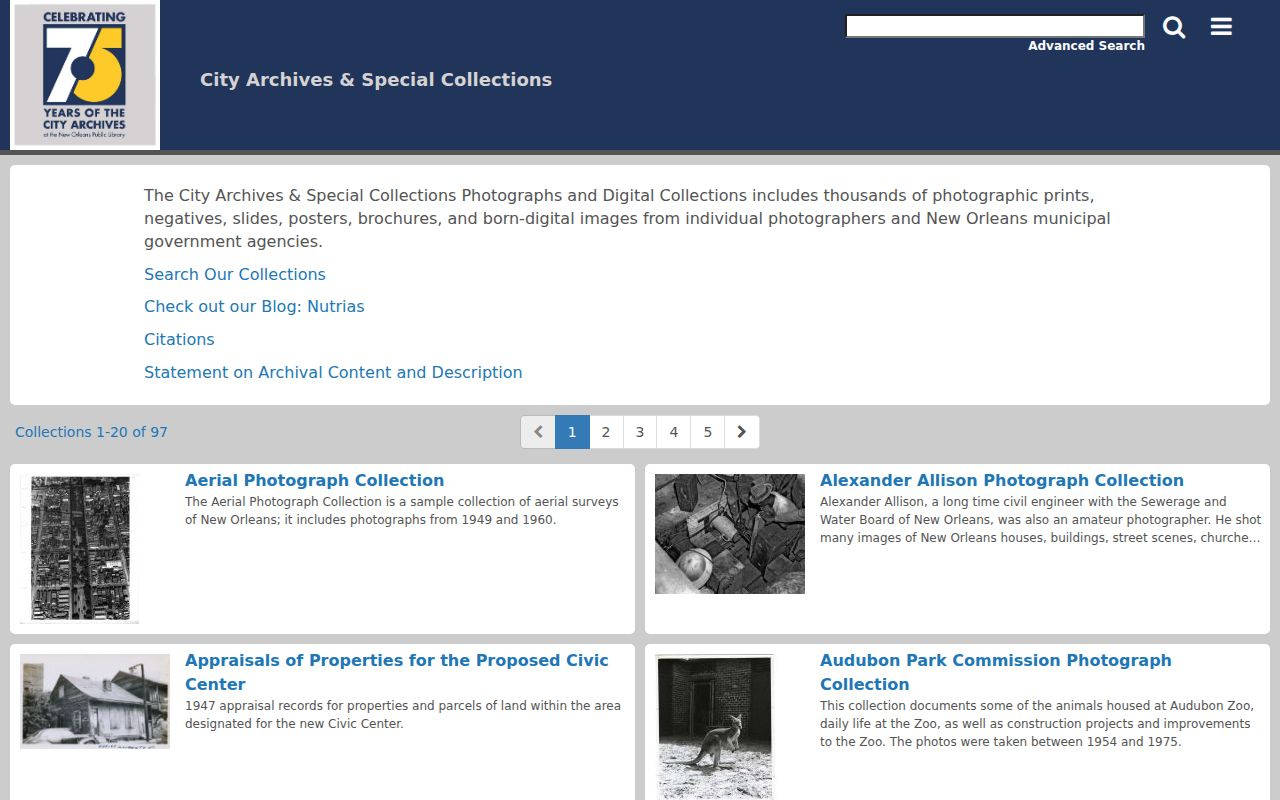
When a database shows only an index, use it to locate the cited year and page, then ask a library or the City Archives whether the full image is available in another format. Save the database, collection title, year, printed page, and repository in the citation.
Reading a Louisiana Directory Entry
A stable text-readable entry image was not supplied in the research, so the inventory below is a field checklist, not a transcription of a page that has been inspected. Directory conventions vary by edition. When you open a volume, take the front matter and its abbreviation key along with the name page, then write down what is printed before you interpret a mark.
| Name | Printed surname and given name or initial; note a household head or other name order used by the edition. |
|---|---|
| Occupation | Transcribe the printed occupation as written, including any short form. |
| Spouse or household note | Record a spouse or relative notation if the entry includes one. |
| Address | Copy the printed number and historical street spelling exactly. |
| Owner/renter mark | Note the symbol or letter only when that edition defines one. |
| Widow or business notation | Copy the wording as printed and check the edition’s key before expanding it. |
- Criss-cross directory
- A reverse section arranged by street address, often listing the name associated with a number.
- Householder index
- An alphabetic name list that points to an entry or page in a directory volume.
- Abbreviation key
- The edition’s own list of shortened terms and symbols, usually in the front matter. Use that key rather than importing meanings from another year.
Cite the title, publisher, year, page, format, and repository. Preserve the historical street spelling; use a map to explain a change, not to overwrite the printed entry. If a character is unclear, compare another year and note the uncertainty rather than filling it from memory.
Louisiana Directory Cross-Reference Starts in 1932
New Orleans street-address cross-reference listings begin in 1932. That date changes the search method: for an earlier address, a reader cannot expect to turn to a street section and find an occupant. Start with an alphabetic name entry when a person is known, then bridge the address through deeds, plats, and historical maps. Keep the old street spelling and number as printed until the property link is supported by a second source.
This is also a useful check on assumptions about digitization. A searchable catalog or an online scan does not guarantee that every year has a reverse index, and a directory may not have been published at all in a given year. The New Orleans set has no issues for 1862-1865. Treat an empty search as a prompt to change the route or ask the repository, not as proof that no directory or resident record survives.
Louisiana State Library Directory Shelves
The State Library of Louisiana’s fifth-floor Louisiana Collection is the broadest starting point for smaller-city and town materials described in the research. Its holdings include current and historical city directories, telephone books, genealogy books, Louisiana family histories, newspapers, maps, microfilm, and electronic databases. The library is open to all without an appointment; call 225-342-4914 or email laref1@library.la.gov to ask whether a specific town and year are on the shelf. The Louisiana Collection guide describes these holdings and contact options.
The collection can also help a search cross a parish line. Louisiana has parishes rather than counties, and the State Library advises checking more than one parish when a family moved. A town title may sit in a broader Louisiana collection rather than in the local library nearest the former address, so search the library catalog and ask reference staff before ruling it out.
Louisiana Archives for Missing Runs
The State Archives is a second access route when a directory citation points to older parish material or when a local result stops at a gap. Its research library provides access to state records and parish microfilm, including assessment, church, military, immigration, and other historical collections. The State Archives microfilm guide is organized by parish and record group; some parishes have long runs, some have only certain categories, and some groups are listed as absent. A clerk remains the custodian of parish records, and the guide says permission may be needed before using some records at the Archives.
The Louisiana State Archives Research Library page describes its research access and is the right place to confirm current visit details. The library is listed as open Monday through Friday, 8 a.m. to 4:30 p.m.; its contact number is 225-922-1208.
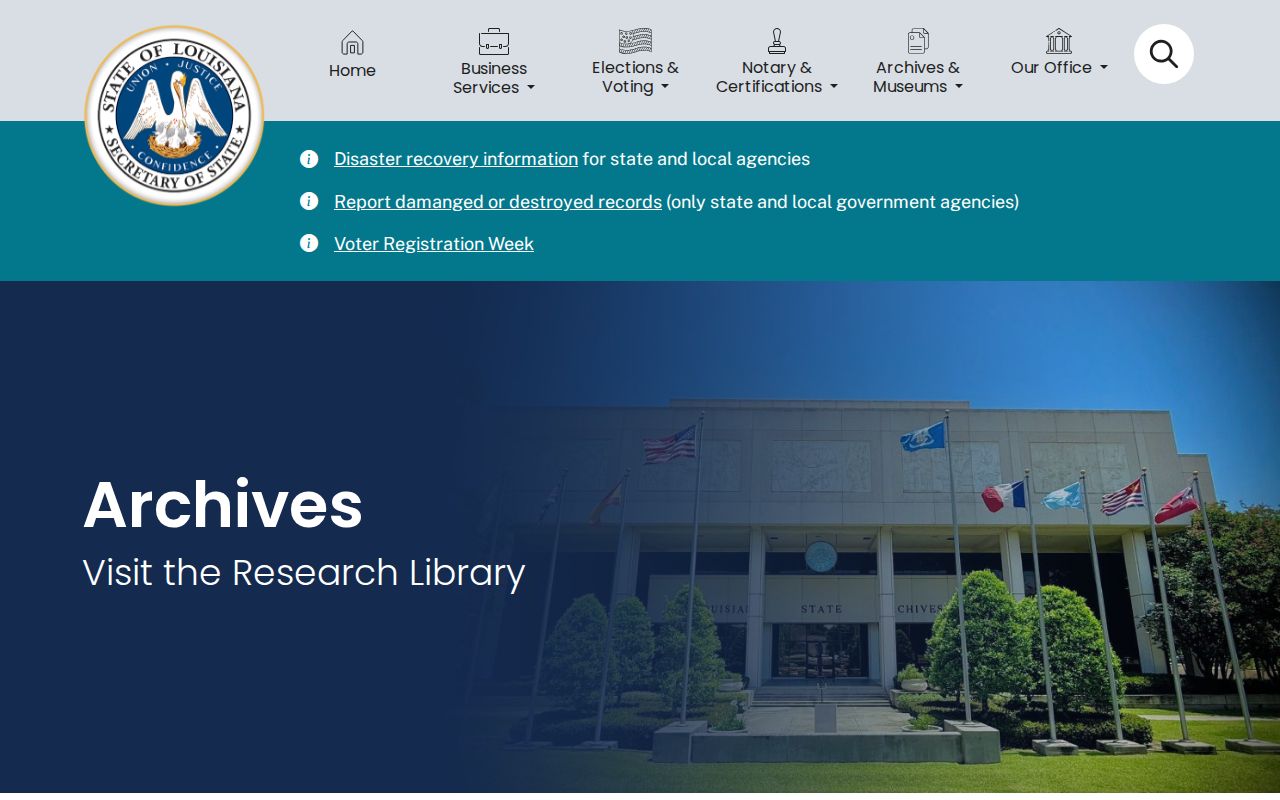
Louisiana’s modern archive system grew from a 1954-56 statewide records survey and was created by Act 337 of 1956. Its research library now links researchers to state records and parish-level material. That history helps explain why a directory search can require more than one custodian: publication and preservation developed across cities, parishes, libraries, and archives.
Louisiana Church and Newspaper Clues
Louisiana’s statewide civil birth registration did not begin until 1918, and early parish records are incomplete. Church registers, especially Catholic sacramental records, can help with earlier family history. The State Library advises checking more than one parish when a family moved across parish lines.
New Orleans City Archives holds obituary and news card indexes, newspapers, maps, photographs, and genealogy material; the State Archives Wise Genealogical Library includes church records, census indexes, immigration schedules, and family-history books. NARA Fort Worth’s Louisiana naturalization holdings include New Orleans District Court petitions from 1838-1861 plus Opelousas and Shreveport material. Compare each dated record with the directory rather than treating it as a substitute.
Trace a Louisiana Household Across Directories
Use a directory as a dated household clue and compare it with census years. The federal census is public through 1950 in 2026 under the 72-year rule; 1960 is due in April 2032. Census schedules add household and address context, while a directory may list only a head of household, a business, or a roomer.
- Choose a town, parish, and date, then search alphabetically in the nearest directory year.
- Record the name, address, occupation, household note, and any edition-defined owner/renter mark.
- Try nearby years, spelling variants, remarriage or widow notation, and another parish if needed.
- Compare the 1930, 1940, and 1950 census years where they fit the family timeline.
- For New Orleans, use a reverse section when one exists; bridge earlier addresses through deeds or maps.
A name that disappears does not show why. The person may have moved, used another spelling, appeared in another parish, or died. Test the gap with an obituary, church register, cemetery source, probate file, or later directory. For one address’s backward trail, use the Louisiana previous residents page.